Luxury hospitality is not simply evolving, it is being fundamentally redefined. What was once centred on ownership, status and visible symbols of success has shifted decisively toward experience, emotion and meaning. Today, luxury is less about what guests possess and more about how they feel, how deeply they connect, and how personally relevant each moment becomes.
This transformation is structural. Experiential luxury – travel, hospitality, wellness and fine dining – is now the primary engine of growth in the global luxury economy, while many traditional product‑driven segments face maturity or decline (Bain & Company & Altagamma, Luxury Goods Worldwide Market Study 2025). At the same time, high‑net‑worth consumers are reallocating spending toward immersive experiences that reflect their identity, values and sense of purpose (McKinsey & Company, State of Luxury 2025).
As a result, hospitality now sits at the very centre of luxury’s future. Yet while capital continues to flow into architecture, design and technology, the industry risks underinvesting in the one factor that truly defines experience: leadership.
If luxury hospitality organisations continue to educate, hire and promote leaders primarily for operational control rather than emotional intelligence, they will become more efficient yet increasingly forgettable. In an experience-led economy, excellence can no longer be delivered through systems and standards alone. It is created through human connection.
The future of luxury hospitality therefore depends on a new kind of leader.

As luxury becomes less transactional and more relational, the industry requires hybrid capability leaders – individuals who combine emotional intelligence, cultural fluency and creativity with digital knowledge and data awareness. Technology, particularly artificial intelligence, is rapidly transforming hospitality, enabling hyper‑personalisation, predictive service design and operational efficiency at large scale.
Yet the brands that outperform are those that treat AI as an enabler rather than a substitute, allowing technology to handle data and repetition while leaders focus on judgement, empathy and relationship‑building.
Artificial intelligence will not dilute luxury but it will expose it. Brands that have not invested deeply in human capability will quickly discover that data alone cannot replace intuition, trust or cultural sensitivity (McKinsey; BCG, Hospitality Horizons 2026).
At the same time, luxury itself is becoming more intimate and intentional. Guests increasingly favour smaller, more curated environments such as boutique properties, low‑occupancy concepts and experiences characterised by scarcity, privacy and personal relevance. Exclusivity is no longer defined by price or scale, but by access, anticipation and authenticity.
Wellness has also moved from an amenity to a strategic pillar of luxury hospitality. What began as spa indulgence has evolved into holistic wellbeing encompassing mental health, longevity, sleep quality, nutrition and reconnection with nature. Luxury is now seen as an investment in quality of life, not merely lifestyle.
Sustainability, meanwhile, has become non‑negotiable. For today’s luxury guests, environmental and social responsibility are no longer optional signals; they are prerequisites. Responsible design, ethical sourcing and meaningful engagement with local communities are now inseparable from perceptions of quality and credibility.
These shifts in guest expectations are mirrored equally by changes in talent expectations. Young professionals entering hospitality today are not simply seeking a role; they are seeking alignment, growth and purpose. Research consistently shows that purpose and values are decisive factors in career choice and retention, particularly among Gen Z and Millennials (Deloitte, Global 2025 Gen Z and Millennial Survey).
Yet while the industry frequently speaks about talent shortages, it rarely questions how leaders are prepared in the first place. In an experienced luxury economy, educating for efficiency rather than emotional intelligence is no longer sufficient. Leadership readiness must be redefined: earlier, deeper and with far greater emphasis on human capability, and industry exposure alongside technological knowledge.
Luxury hospitality’s leadership challenge begins long before hiring. As the industry shifts toward experience and human connection, leadership preparation must evolve accordingly placing emotional intelligence alongside technical capability. Failing to do so risks slowing the industry’s relevance over time.
This calls for a closer and more deliberate integration between education and business. Academic institutions and hospitality organisations can no longer operate on parallel tracks. Curricula must evolve in step with guest expectations, embedding real‑world complexity, cultural intelligence, ethical leadership and emotional intelligence into the formation of future leaders. Learning must be continuous, experiential and purpose‑driven not confined to the early stages of a career.
The organisations that succeed in this environment are those that make a clear promise to their people: that in creating exceptional places and experiences, individuals also create their own growth, identity and legacy. When that promise is lived through inclusive policies, continuous development and shared achievement, loyalty follows, particularly among younger leaders who value authenticity.
Ultimately, the future of luxury hospitality will not be shaped by architecture, algorithms or scale alone. It will be defined by people.
In a world increasingly optimised for efficiency, the ultimate differentiator remains human connection and thus, the ability to inspire trust, foster belonging and create meaning. The leaders of tomorrow must be trained to think relationally rather than transactionally, to manage emotion as carefully as performance.
Talent strategy is therefore no longer a support function. It is a leadership mandate. The institutions and organisations that recognise this and invest accordingly will shape not only the future of hospitality, but the future of luxury itself.
Luxury hospitality’s next era will not be defined by the experiences we design, but by the leaders we educate because the future of luxury is ultimately a human one.
Carlos Díez de la Lastra is CEO of Les Roches.

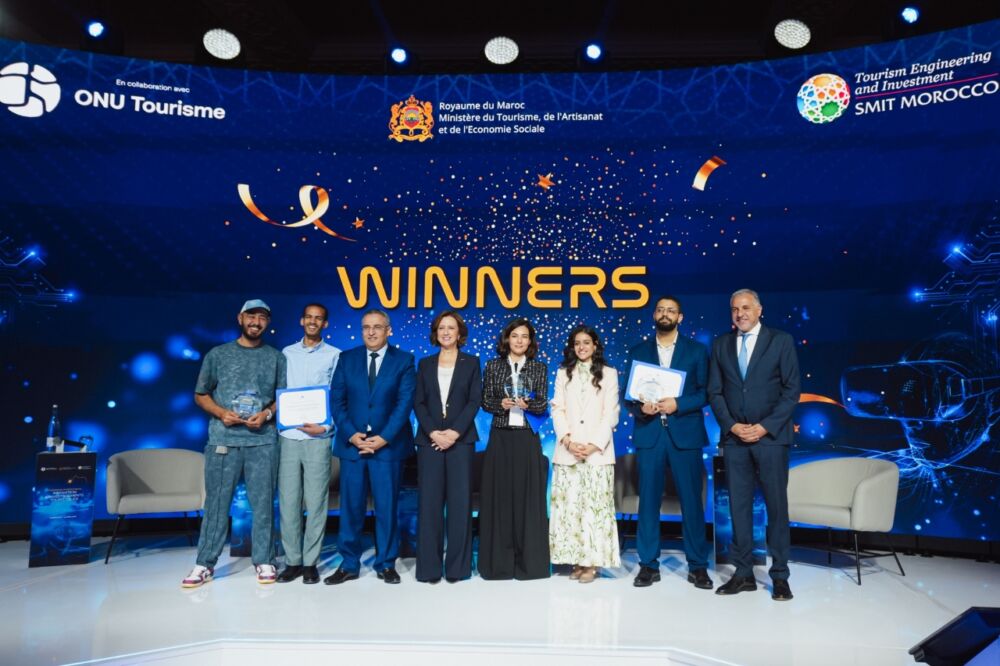
In other developments, Les Roches, through its innovation hub SPARK, has congratulated the winners of the UN Tourism National Startup Competition, an initiative supporting entrepreneurs who are redefining global tourism through innovation and technology. The winners were announced during the International Conference on Technological Innovation and Tourism Investments, held in Marrakech, Morocco.
The competition recognised innovation across Digital Tourism, Gaming for Leisure and Moroccan Gastronomy. The selected start-ups stood out for their innovative approaches and for showcasing Moroccan creativity on the global stage:
- Beyond the Map – Overall winner, recognised for combining augmented reality, AI agents and text‑to‑speech technology to offer travellers immersive experiences at historical landmarks and cultural heritage sites.
- Mossika – Winner of the Gaming for Leisure category, an online music education platform that connects learners with musicians and their cultures through a deeply human‑centred approach.
- Medina Mirage – Winner of the Moroccan Gastronomy category, recognised for its effective use of technology to craft immersive dining experiences for tourists.
Prior to the conference, all finalists participated in masterclasses and one‑to‑one mentoring sessions with Bridge for Billions. Moving forward, the selected teams will continue their journey with targeted mentoring and support from Les Roches and SPARK, while joining the UN Tourism Innovation Network, gaining access to international expertise, strategic partnerships and pathways to scale.
With more than 70 years’ experience educating leaders in hospitality and luxury tourism, Les Roches has developed SPARK as a living ecosystem of innovation and entrepreneurship, connecting visionary founders with the tools, mentorship and global network needed to transform ideas into solutions with worldwide impact.
Carlos Díez de la Lastra, Chief Executive Officer of Les Roches and jury member, said: “We are living through an extraordinary moment for tourism. Technology is opening possibilities that were unthinkable just a few years ago. At Les Roches, we want to be at the heart of this transformation – not only by educating future leaders, but also by supporting those who are reinventing the rules of the industry.”